+33-9-7266-3068
 contact@gdm-pixel.fr







 TL;DR - Key Takeaways at a Glance
Your voice is worth money — you just didn’t know it yet
How many hours do you spend each year recording voice messages, customer tutorials, product presentations? For most entrepreneurs, it’s time swallowed up and never recovered. Grok, xAI’s AI, has just changed the game with a feature that deserves serious attention: Custom Voices, voice cloning in under two minutes, available in 28 languages.
This is not science fiction. It is in production today.
And it raises two questions every entrepreneur should ask: what does this change concretely for my business? And what risks does it imply that nobody clearly explains to you?
I will give you both sides of the picture — in keeping with our approach as an AI agency focused on concrete results for small and medium businesses.
What Grok Custom Voices actually does
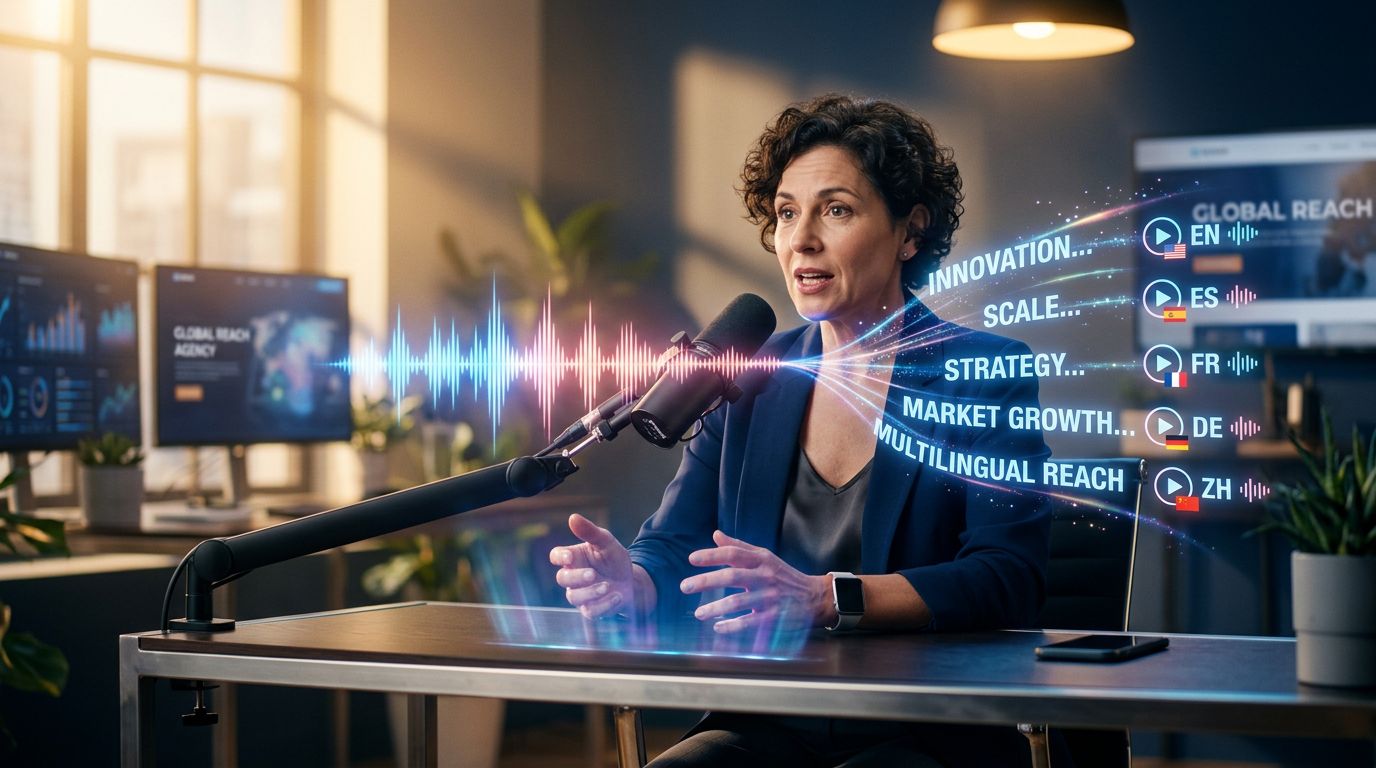
The promise is simple: you record a sample of your voice for under two minutes. The AI analyses your intonations, your timbre, your rhythm. It builds a vocal model that sounds like you. Then you type any text — and it is your voice that reads it, in 28 different languages.
Not a generic voice. Yours.
This is the fundamental difference from the voice synthesis we knew until now. ElevenLabs, Murf, or Google Text-to-Speech voices produce decent results, but impersonal ones. Here, we are talking about a personalised vocal asset, indexed to your identity.
Concretely, what use cases does this open up?
Audio and video content on demand
A merchant selling online can now produce product presentations in French, English, Spanish — with their own voice — without ever re-recording anything. They write the script, the AI speaks. The customer hears a human, consistent, recognisable voice. Not a robot.
Accessibility and customer service
Your FAQs, your usage tutorials, your installation guides — all of it can be converted to audio with your voice. For customers who prefer listening to reading (and there are many), this is a real experience gain.
Personal branding and brand consistency
Your voice becomes a signature. Like a sonic logo. On your podcasts, your YouTube videos, your audio newsletters, your voice assistants integrated into your site — it is always you they hear, even when you are asleep.
The concrete opportunity for SMEs
This is where it gets interesting for human-scale businesses.
Large brands have long had dedicated teams for audio production. They pay for studios, dubbing actors, sound engineers. You do not have that budget. And until now, it showed — or rather, it was heard.
AI voice cloning rebalances the equation.
“Voice is the most intimate communication channel that exists. A brand that speaks with a consistent real human voice creates a connection that text alone cannot establish.”
For a regional SME wanting to develop its export market, for example, the ability to produce vocal content in English or German with the director’s voice — without an audio translation budget — is a real competitive advantage. Not marginal. Real. This is exactly the pattern we observe in our analysis of discreet AI creative tools that trigger deep strategic transformations in businesses.
What we see concretely in our daily work at GDM-Pixel: sites that integrate audio content (podcasts, voice guides, presentations) generate significantly longer visit times. Google measures it. SEO benefits from it.
Now let’s talk about the flip side.
The risks nobody honestly explains to you
Voice cloning is also one of the most easily exploitable technologies that has ever existed.
Audio deepfake. If your cloned voice falls into the wrong hands, someone can make you say anything. A compromising statement. A fake message to your clients. A phone scam using your vocal identity to deceive your partners. This is not hypothetical — “fake CEO” scams already exist without sophisticated voice cloning. With it, they become undetectable to the ear.
The ownership question. Who owns the vocal model you create on a third-party platform? Grok’s terms of service, like those of most AI services, are worth reading line by line. Is your vocal fingerprint stored? Can it be used to train other models? These questions are not paranoid — they are legitimate.
The erosion of authenticity. If your voice can be generated at will, what proves it is really you speaking in a video? For professions that build their credibility on their word — lawyer, doctor, financial adviser, business executive — this is an existential question.

What the legal framework says (and does not yet say)
In France, voice protection falls under image rights and more broadly the right to privacy. The GDPR considers voice as biometric data as soon as it enables identification of a person. This means that processing vocal data for cloning purposes is subject to the usual rules: explicit consent, defined purpose, limited retention period.
In theory.
In practice, regulation has not yet caught up with the speed of tool development. The National Agency for Information Systems Security (ANSSI) has begun documenting the risks related to audio deepfakes in its reports on disinformation. The European Commission, via the AI Act that came into force in 2024, imposes transparency obligations on AI-generated content — but application is still being rolled out.
What we can say today: using your own voice to produce content for your own business is legal and carries no particular risk. Using someone else’s voice without explicit consent is a potential violation of the GDPR and the right to personality.
The boundary is clear. It will just become increasingly difficult to enforce technically.
How to integrate voice AI into your strategy without shooting yourself in the foot
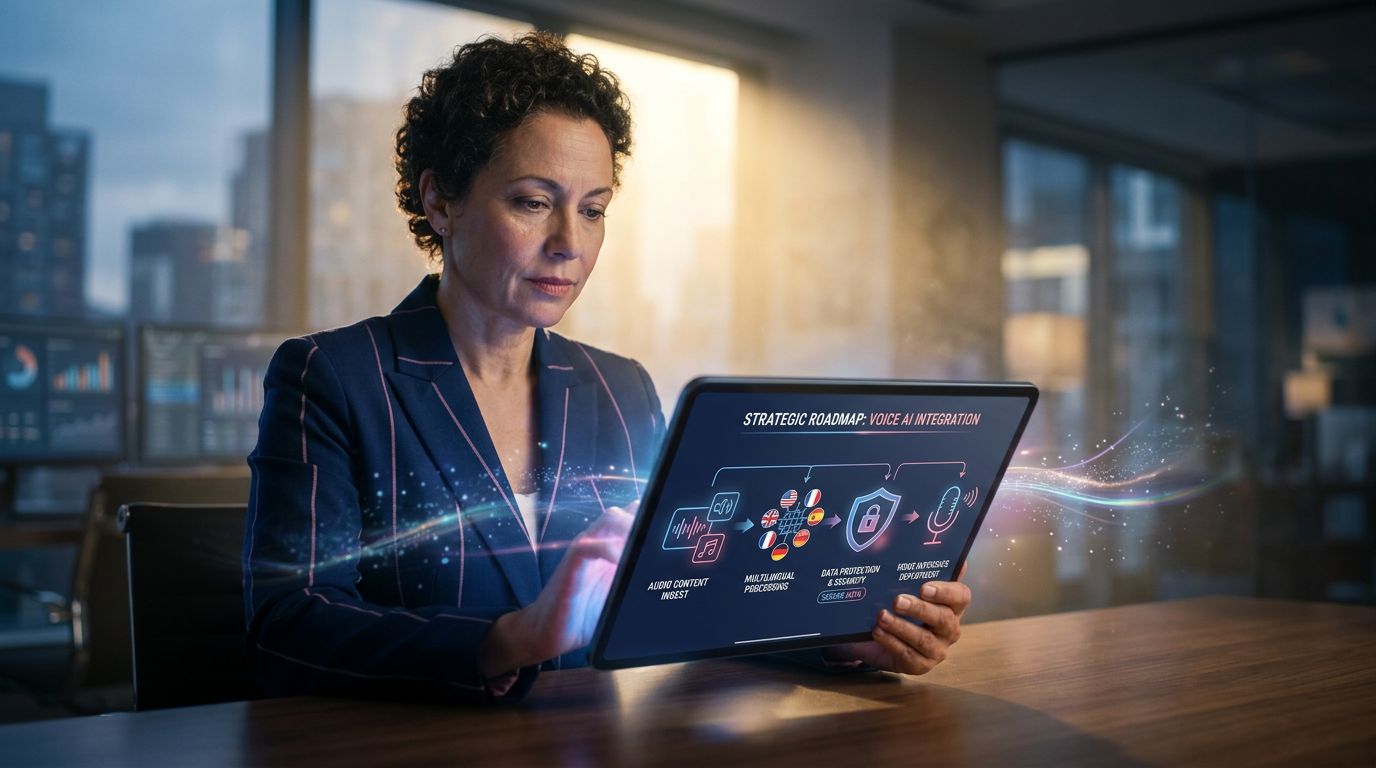
My advice for an SME wanting to explore this territory: proceed methodically.
Start with internal uses. Convert your internal procedures, your employee training guides, your meeting notes to audio. Zero risk, immediate time savings. You test the technology without exposing your brand.
Define your vocal territory. Decide which content will be produced with your cloned voice, and which will remain recorded “for real”. Consistency matters. A live LinkedIn video, a press interview, a conference speech — keep these authentic. Repetitive and scalable content (tutorials, FAQs, product presentations) — that is where automation makes sense.
Document your uses. If you use a cloned voice in public content, say so. Not necessarily in large print — but somewhere in your legal notices or content policy. This is a matter of trust with your audience, and trust is built over years but lost in a single incident.
Choose your tools carefully. Grok Custom Voices is the latest announcement, but it is not the only player. ElevenLabs has existed longer and has a more documented vocal protection policy. Compare the terms of service before depositing your vocal fingerprint somewhere.
Three takeaways before you get started
Here is what I find concretely actionable on this topic:
1. Your voice is already an asset — start treating it as one. If you do not yet have an audio content strategy, now is the time to think about it. Not because it is fashionable. Because audio content has a measurable SEO impact and creates a human connection that text alone cannot reproduce.
2. AI voice cloning is a production tool, not a substitute for your presence. Use it to scale what is repetitive. Keep your real voice for what matters: your strategic clients, your public positions, your moments of commercial truth.
3. Anticipate risks before they become problems. Check the terms of service of the platforms you use. Brief your team. And if you are in a sector where your word has strong legal or commercial value, consult a lawyer specialising in digital law before going further. On the philosophical background of these shifts, we have already traced the perspective in what future for humanity: the risks and challenges of AI.
The real question is not technological
Grok Custom Voices, like the tools that preceded it and those that will follow, are merely amplifiers. They amplify what you are already doing well — and what you are doing poorly.
If your content strategy is vague, cloning your voice will not make it clearer. If your customer relationship is solid, having your voice available 24/7 in 28 languages can genuinely create value.
The technology is ready. The question is: is your business ready to use it intelligently?
At GDM-Pixel, we have been working for several months on integrating automated audio content into the sites we deliver — notably via our Nova Mind pipeline. If you want to understand how this can be concretely integrated into your site or content strategy, let’s talk directly. Not a sales call — an honest diagnosis of what makes sense for your situation.
Sources: xAI Grok - Custom Voices announcement • ANSSI - report on deepfakes • European AI Regulation (AI Act, 2024)
 Social networks
 Analyze with AI