+33-9-7266-3068
 contact@gdm-pixel.fr







 TL;DR - Key Takeaways at a Glance
What major brands have understood (and most e-commerce merchants ignore)
A customer who receives their order late doesn’t complain. They simply never come back.
It’s harsh, but it’s exactly what the data shows. According to a Narvar study, 96% of consumers dissatisfied with their delivery experience will not buy from that site again — without ever saying so. They disappear, silently. And in the meantime, you keep spending on acquisition to replace customers you should never have lost.
Lululemon understood this before most others. By simultaneously entering new markets with physical stores AND an integrated e-commerce infrastructure, the brand took a calculated risk: delivering a consistent experience across two channels, in countries where logistics expectations, return habits, and service standards vary radically. This bet reveals a truth that French SMEs looking to sell internationally would be wise to grasp from the start.
The post-purchase experience is not an operational detail. It is a growth lever.
Delivery: your first impression after the sale
Your customer clicked. They paid. Now the real relationship begins.
What we consistently observe with our e-commerce clients: the vast majority of effort — budget, time, energy — is concentrated on the product page, the conversion funnel, and visuals. And delivery? A carrier is chosen, a pricing rule is set up, and everyone moves on.
This is a costly mistake in international markets.
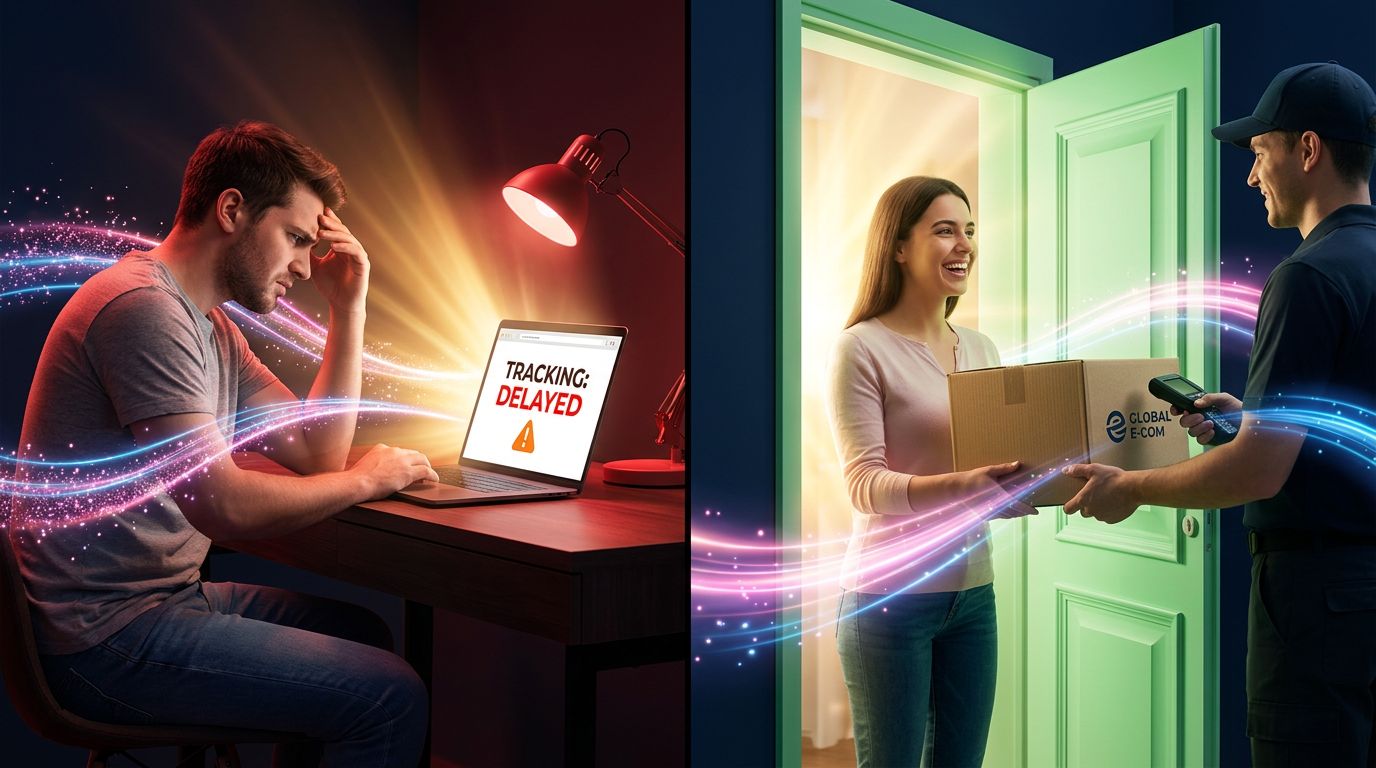
In a domestic market, French consumers still tolerate some imprecision. A two-day delay, a generic tracking email, a poorly packaged parcel — it’s sometimes forgiven.
Internationally, it’s a different story. Every market has its standards. In Germany, punctuality is not a marketing promise — it’s a baseline requirement. In Japan, packaging IS the product. In the United States, free returns are considered a right, not a perk.
Here are the three variables you must master before entering a new market:
Your delivery promise must be realistic, not optimistic. A deadline met 100% of the time is worth more than an ideal deadline met 70% of the time. Your customers prefer a guaranteed “5 business days” over a random “2–3 days.”
Real-time tracking is no longer a bonus. It’s expected. A working tracking link, in the customer’s language, with proactive notifications in case of anomalies — that is the 2024 standard, not a differentiator.
Customs and local taxes must be handled by the seller. Nothing destroys trust faster than a customer discovering unexpected customs fees upon delivery. The DDP model (Delivered Duty Paid) — where you absorb these costs upfront — is becoming essential in non-EU markets.
Returns: the ultimate test of your omnichannel maturity
Here’s where things get interesting — and often painful.
Returns are the blind spot of most international e-commerce strategies. They are treated as a cost to minimize, when in reality they are an indicator of trust and a loyalty tool.
“Easy returns don’t encourage abuse — they encourage buying.” — Tobin Moore, co-founder of Optoro, specialist in reverse logistics.
Take the example of an online clothing store based in France that decides to open up to the UK market post-Brexit. The returns question immediately becomes complex: customs, shipping costs, timelines, refunds in British pounds. If you haven’t anticipated this, you’ll either lose money on each return or frustrate customers with a kafkaesque process.
What agencies rarely tell you: the return policy is often the decisive purchase factor, not just a loyalty factor. Studies show that 67% of online shoppers consult the “returns” page before finalizing their order. In an international market where you don’t yet have brand recognition, this page can make or break your conversion rate.
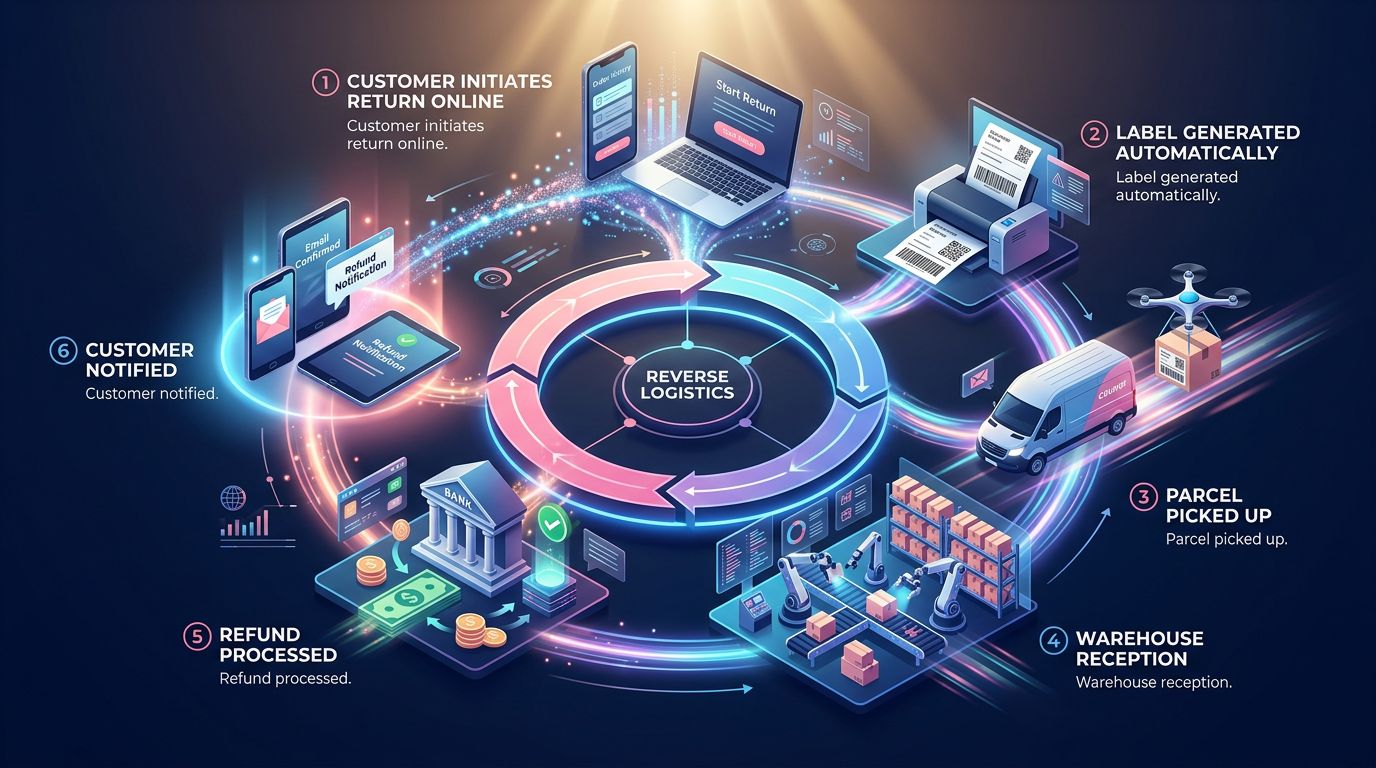
Best practices we systematically recommend:
Centralise return management in your back office
Whether the return comes from an online order or an in-store purchase, the customer should not have to explain their problem twice. A unified system (PrestaShop with a suitable module, or WooCommerce with a centralised returns plugin) eliminates friction and gives you a clear view of your rates by product and market.
Offer multiple return options
In-store, at a drop-off point, or at home. The more options you provide, the more you reduce return abandonment — and paradoxically, the more you build loyalty. A customer who had an easy return will come back to buy again.
Automate refund notifications
Refund timelines are often what generates the most support tickets. An automated email at each stage (return received, inspection validated, refund in progress, refund completed) reduces inbound contacts by 40 to 60% based on our field observations.
International omnichannel: when physical and digital must speak the same language
Lululemon doesn’t just open stores in new countries. The brand creates experiences where every touchpoint — Instagram, website, physical store, app — tells the same story with the same rules.
That is the essence of successful omnichannel. And it is much harder to execute than to theorise.
Here is the concrete problem most brands face in international expansion: the systems don’t talk to each other. In-store stock is not synchronised with online stock. Local promotions don’t feed into the global CRM. Customer data purchased in-store in Lyon is not linked to the account created online in Montreal.
Result: the customer ends up navigating silos, while thinking they’re interacting with a single brand.
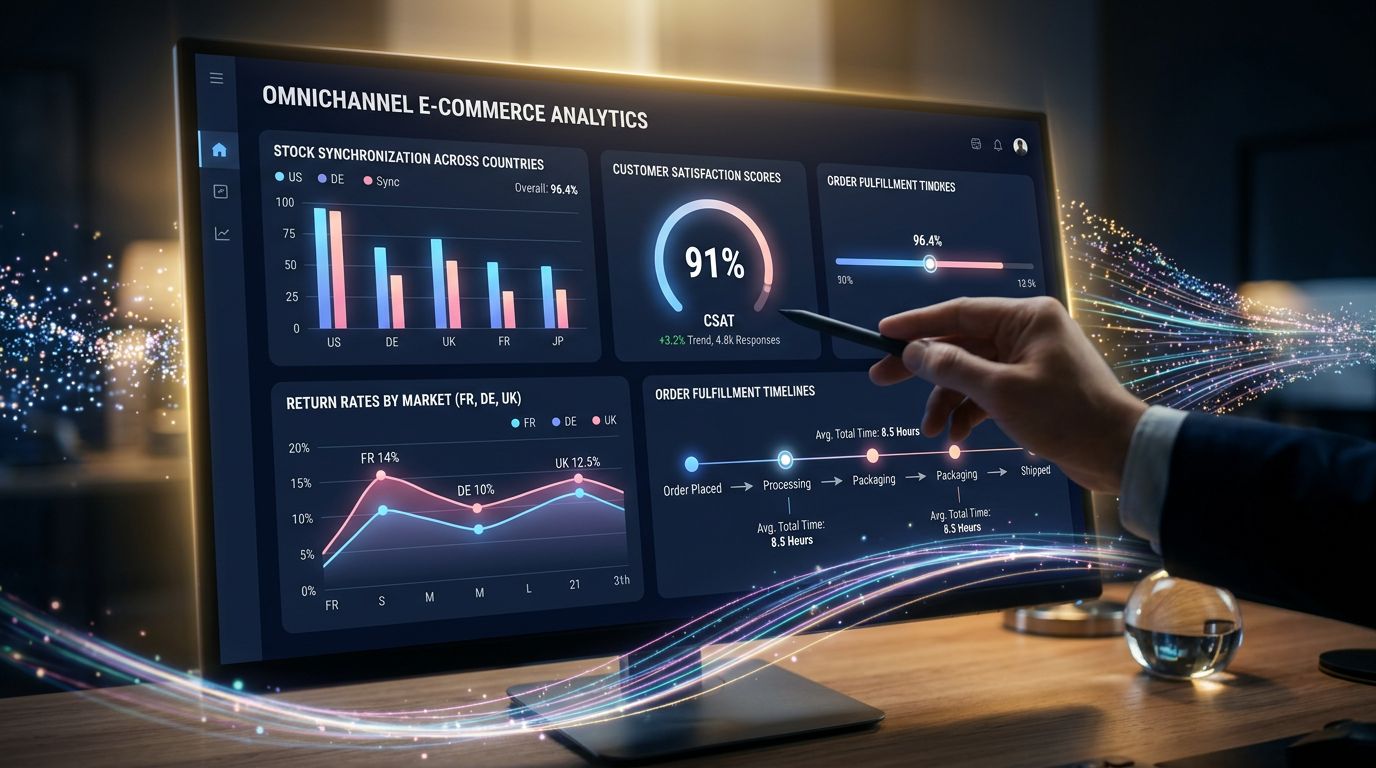
What we’ve observed on the projects we’ve led: real-time stock synchronisation is the number one technical priority for any brand that wants to take omnichannel seriously. Not the most glamorous project. But the most critical.
“Omnichannel is not a marketing strategy. It’s a technical architecture.” — Anonymous, but so true.
For a French SME considering selling internationally across multiple channels, here is the realistic sequence:
Step 1 — Unify customer data. A central CRM that aggregates interactions from all channels. No miracle here: it requires real integration work, but it’s the foundation of everything.
Step 2 — Synchronise stock. In near real time. A customer who orders a product listed as “in stock” and then receives a cancellation two days later will not return.
Step 3 — Localise the experience without fragmenting the identity. Language, currency, local payment methods (Klarna in Germany, iDEAL in the Netherlands, PayNow in Singapore) — each market has its codes. But design, tone, and values remain consistent.
Step 4 — Measure by market, not globally. Your return rate in France has nothing to do with your return rate in the UK. Segment your analyses, or you’ll be flying blind.
What this concretely changes for a Normandy-based online store
You are not Lululemon. Your budget is not the same. Neither is your team.
But the principles apply at the same scale — proportionally.
If you manage an online store in Normandy and sell (or want to sell) outside of France, here are the three high-impact actions we recommend as a priority:
Audit your post-purchase experience before investing in acquisition. How much does each customer lost after a poor delivery experience cost you? Calculate that figure. It is often higher than your cost of acquisition. Before spending on advertising, make sure the customers you already have want to come back.
Simplify your return policy and make it visible. A dedicated page, clear, in multiple languages if you sell internationally. No hidden conditions. No form to print. A process your customer can initiate in under two minutes.
Invest in technical integration rather than new tools. The problem with most online stores is not a lack of tools — it’s that their existing tools don’t communicate with each other. Good integration work (PrestaShop ↔ CRM ↔ returns management tool ↔ carrier) will give you more value than a new platform.
Conclusion: loyalty begins after the sale
Acquisition is visible. Conversion is measurable. Post-purchase is often invisible — until it goes wrong.
The brands that succeed internationally are not those with the biggest marketing budget. They are those who understood that every delivery is a promise, every return is an opportunity, and every post-purchase interaction is an investment in the next sale.
In Normandy as elsewhere in France, SMEs selling online face the same challenges as major brands — at a different scale. The good news: the technical solutions exist, they are accessible, and they don’t require a complete overhaul of your infrastructure.
Sometimes, three weeks of work on your returns process is worth more than six months of advertising campaigns.
Do you want to audit your post-purchase experience and identify the leaks in your customer funnel? This is exactly the type of diagnosis we carry out at GDM-Pixel — concrete, data-driven, no bullshit. Contact us to discuss it.
 Social networks
 Analyze with AI