+33-9-7266-3068
 contact@gdm-pixel.fr







Two weak signals that say the same thing
One figure. 65 billion dollars raised in a single funding round. Anthropic — the company behind Claude, the AI I use in production every day — just closed the biggest fundraise in tech history. Valuation: 965 billion dollars. Almost a trillion.
Around the same time, Apple is preparing a complete overhaul of Siri. The first screenshots have leaked. The stated goal: an assistant capable of reasoning, understanding context, getting things done — not just setting a timer or calling mom.
Two separate events. But the same signal: the generative AI race is far from over. It’s accelerating. And the players who haven’t yet integrated these tools into their professional daily routine are about to find themselves chasing a train running at full speed.
Here’s what I’m taking away from it — without hype, without buzzword bingo.
Anthropic at $965B: why it’s a signal, not just a number
65 billion raised. Zero European public funds at the table. Read that sentence twice.
This isn’t a side note. It’s a statement on the state of the AI market in 2025. Private American investors — Amazon in the lead, with massive commitments — were already betting on Anthropic across several rounds. Here, they doubled down at a scale nobody had anticipated.
What it means for the AI ecosystem
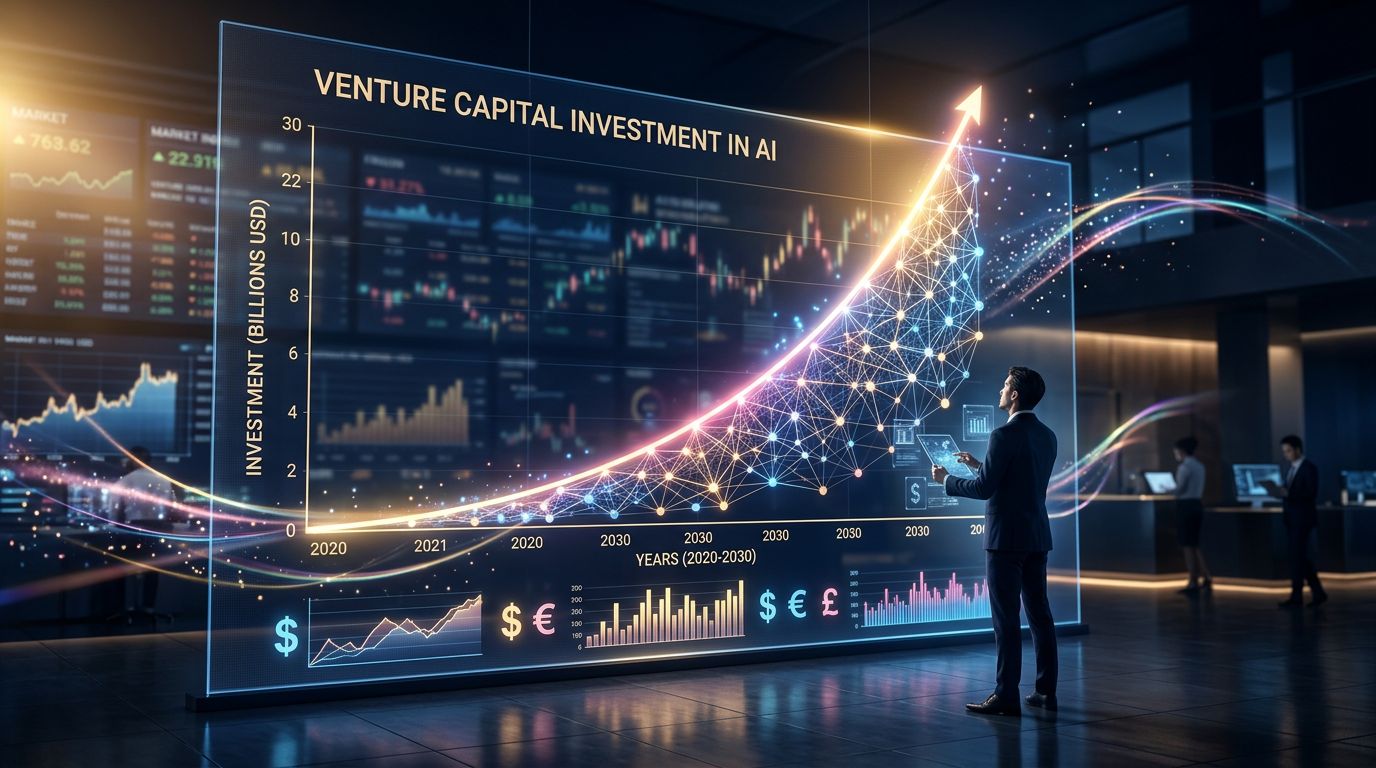
When a company like Anthropic raises at this valuation, two things mechanically happen.
First, models are going to get much better, much faster. These billions aren’t going into anyone’s pocket — they fund compute clusters, research teams, training data. Claude 4, Claude 5, the next versions will ship faster and be more capable than what we imagine today.
Second, the competition steps up a notch. OpenAI, Google DeepMind, Meta — all of them will have to respond to this raise. For professional users, that’s good news: models will keep improving, prices will drop, integrations will multiply.
What you won’t often hear: a $965B valuation without confirmed profitability is also a bet on the future. Anthropic burns cash. A lot of it. Investors’ hypothesis is that generative AI will become as fundamental an infrastructure as the internet. If they’re wrong, it’s a bubble. If they’re right, those who integrated these tools early will have a 5-year head start on the rest.
I’m not a financial analyst. But I’m a practitioner. And what I see in my agency is that Claude Code has cut my production time by five. At this investment scale, the next versions are going to be even more powerful. Now is the time to learn how to use these tools — not in two years.
Apple rebuilds Siri: the battle moves into your daily life
The other story may have even bigger impact on the general public — and on your customers.
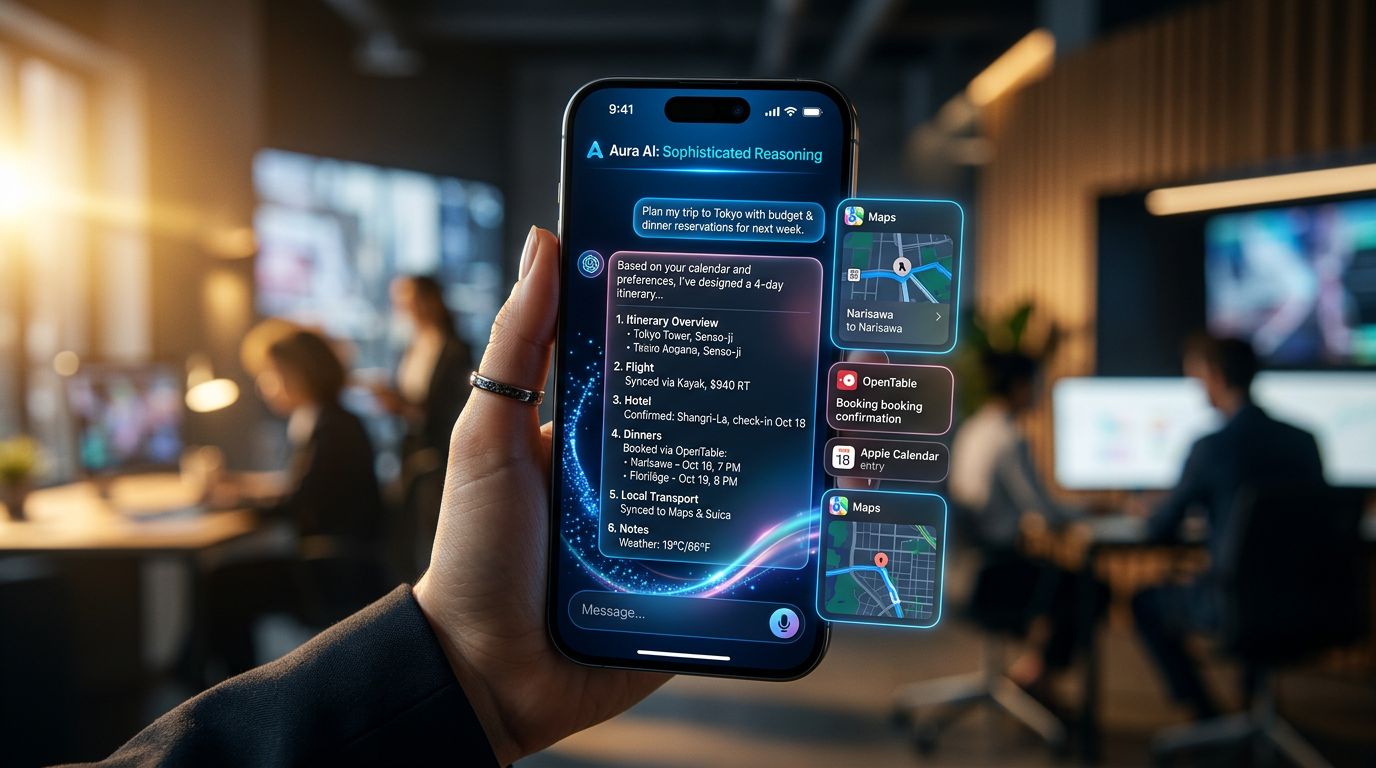
Apple is preparing a rebuilt Siri, capable of reasoning like ChatGPT. The first leaked images show a radically different interface: more context, long structured responses, the ability to take action inside third-party apps.
It’s a break. Since its launch in 2011, Siri has always been a glorified voice-command assistant. “Set a reminder.” “What’s the weather?” “Call Jean.” The joke about Siri being useless went around the internet for years.
Why it changes the game for SMEs
Here’s the question you should be asking yourself: when Siri becomes capable of reasoning, what changes for your customers?
A lot. Your customers are already looking for information through AI assistants. With a rebuilt Siri embedded in every iPhone sold around the world, smart voice search is going to explode. And unlike classic Google search, these assistants don’t return ten links — they give one answer. Just one.
If your site isn’t optimized to answer precise, structured questions with clear and up-to-date information, you don’t exist in this new paradigm. It’s not theory — it’s already happening with ChatGPT Search and Google SGE.
“The question is no longer ‘does my site rank on page one?’ but ‘is my site the source the AI cites when a customer asks a question about my industry?’”
That’s a complete SEO paradigm shift. And most agencies haven’t yet woven it into their client recommendations.
What I see on the ground in my agency
I’m not here to give you a geopolitics lecture on AI. What I care about is the field impact.
Since I integrated Claude Code into my production workflow, I’ve shipped 21 pages for Nova-Mind in 10 hours. The same work would have taken me 3 to 4 days the manual way. It’s not magic — it’s industrialization.
But here’s what these two stories change for how I work and advise clients:
On the production side, the massive investment in Anthropic confirms my stack choice. Claude isn’t going to disappear. It’s going to improve. My Figma → Claude Code → Production workflow will get even more efficient over the next 12 months. I’m investing time to master these tools now, because the learning curve pays off over years.
On the client advisory side, the Siri overhaul accelerates a conversation I’m already having with my SME clients: your site has to be designed for AIs, not just for Google. That means structured data, content that answers precise questions, a clean architecture. It’s not a six-month build — it’s often a 2-3 day audit and a few technical tweaks.
The question nobody really asks
What strikes me in this story: zero European public funds in the Anthropic raise.
France has announced billions for AI. Europe has its programs. But when it comes to co-investing in the models that define global AI infrastructure, European funds are missing from the table.
It’s not a political judgment — it’s an operational observation. The most powerful models on the market are American (OpenAI, Anthropic, Google) or Chinese (DeepSeek, Qwen). European models exist — Mistral leading — but they play in another league for intensive use cases.
For an agency like GDM-Pixel, that means an accepted dependence on non-European infrastructure. It’s a risk to monitor, not to ignore. If tomorrow the access conditions to the Claude API change radically, I need a plan B. That’s why I also test Mistral, and keep an eye on open-source models like Llama.
AI stack diversification isn’t a luxury — it’s risk management.

Three actionable takeaways
No endless list. Three points, concrete, applicable this week.
1. Audit your AI presence right now
Type your company name or your trade into ChatGPT, Claude and Perplexity. What comes back? If your site isn’t cited, you have an AI visibility problem. It’s not the same diagnosis as a classic SEO audit — it’s complementary.
2. Don’t pick a single AI tool
The Anthropic story shows the market is volatile. Record valuation today, possible restructuring tomorrow. Building your workflow on a single model is a risk. Learn Claude AND Mistral AND GPT-4o. Prompts are 80% transferable.
3. Talk to your web agency about optimizing for AI assistants
If your agency isn’t mentioning structured data, schema.org markup and AI-answer optimization in its 2025 recommendations, ask the question. It’s not science fiction — it’s what determines whether you’ll exist in the voice assistant results of tomorrow.
What all this says about the next step
Anthropic at $965 billion. Siri learning to reason. Both signals say the same thing: AI is no longer an advanced option for early adopters — it’s infrastructure being deployed into every phone, every browser, every business tool.
The companies that started integrating these tools 18 months ago have a measurable lead today. Those starting now still have a window. Those waiting “for things to stabilize” will be waiting a long time — because things won’t stabilize. They’ll keep accelerating.
In my agency, I made a choice two years ago: industrialize with AI or stay an artisan. I chose to industrialize. Concrete result: I ship faster, with fewer errors, on more complex projects. It’s not luck — it’s an investment of time and learning.
If you want to understand how to concretely integrate these tools into your business — whether you’re a Normandy SME wanting an AI-ready site, or an agency looking to industrialize its production — that’s exactly what we work on at GDM-Pixel.
Get in touch. We’ll honestly tell you what’s worth it and what isn’t.
 Social networks
 Analyze with AI