+33-9-7266-3068
 contact@gdm-pixel.fr







 TL;DR - Key Takeaways at a Glance
E-commerce is shifting gear — and not where you think
Two pieces of news flew under the radar this week. The first: Worldline, ING and Mastercard just completed the first agentic payment in Europe. The second: three content creator campaigns — a fake heiress, a “tea mob” and a series of everyday little wins — generated results that large classic ad budgets never came close to.
On the surface, nothing in common. In reality, both signals point to the same disruption: the purchase act is moving, fragmenting, and happening where you haven’t yet placed your store.
Here is what that means concretely for a merchant or SME selling online in 2025.
Agentic payment: what it is, and why it concerns you now
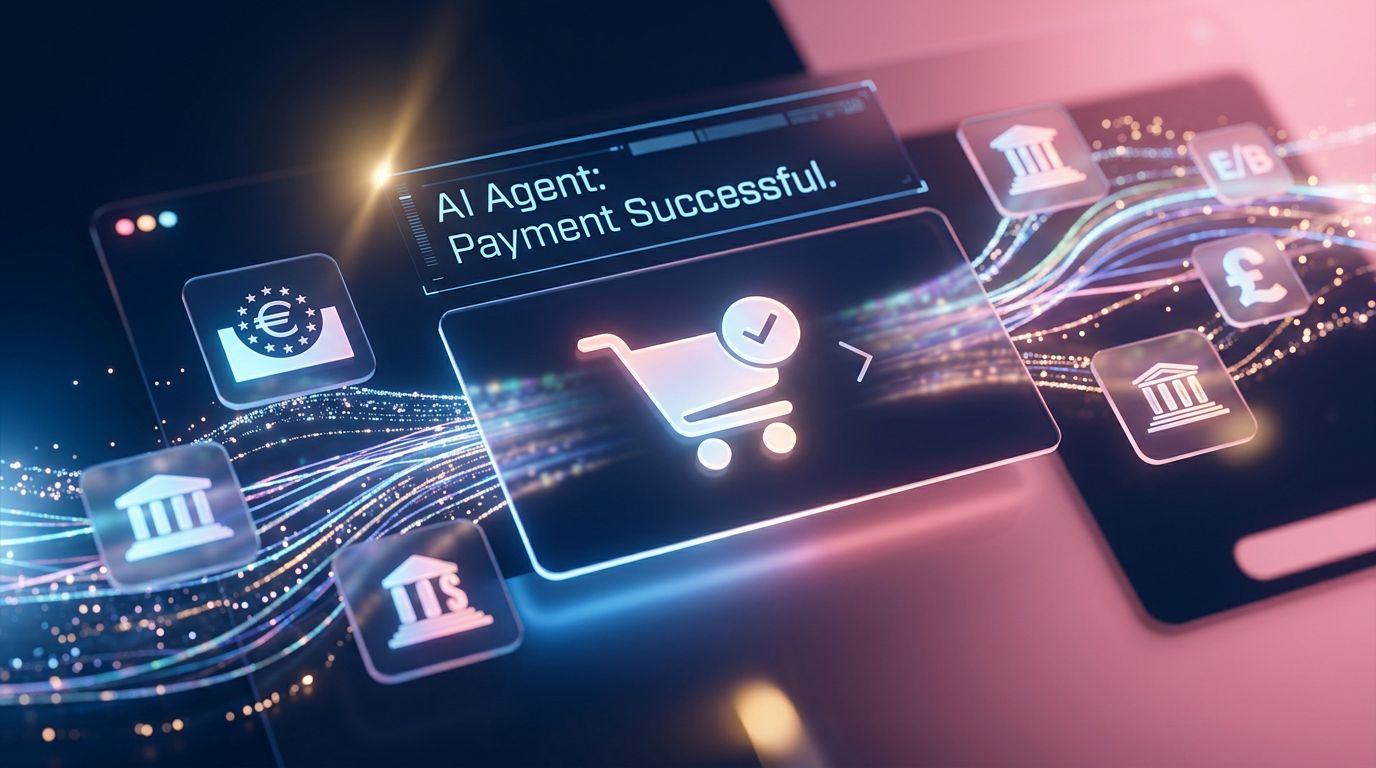
The term is technical, but the concept is simple. An AI agent — an autonomous program that receives an objective and executes it alone — can now, in Europe, initiate a payment without direct human intervention.
In practice: you tell your AI assistant “order me the same ink cartridges as last March when the price is below €35”. The agent watches, compares, buys, pays. You receive the confirmation. You never opened a browser.
Worldline, ING and Mastercard validated this protocol in real conditions. This is no longer a lab concept. It is infrastructure being built.
The question you should be asking yourself now: is your online store ready to be bought by a machine?
What this changes in practice for your store
An AI agent that buys on behalf of a human does not behave like a human. It does not “feel” a beautiful visual. It does not click a promo banner because it is well placed. It reads structured data.
What it looks for:
- A clear and stable price
- A complete and structured product listing (JSON-LD data, clean attributes)
- Real-time availability
- A frictionless payment process
What it ignores completely:
- Your homepage slider
- Your welcome pop-ups
- Your “premium-feel” font
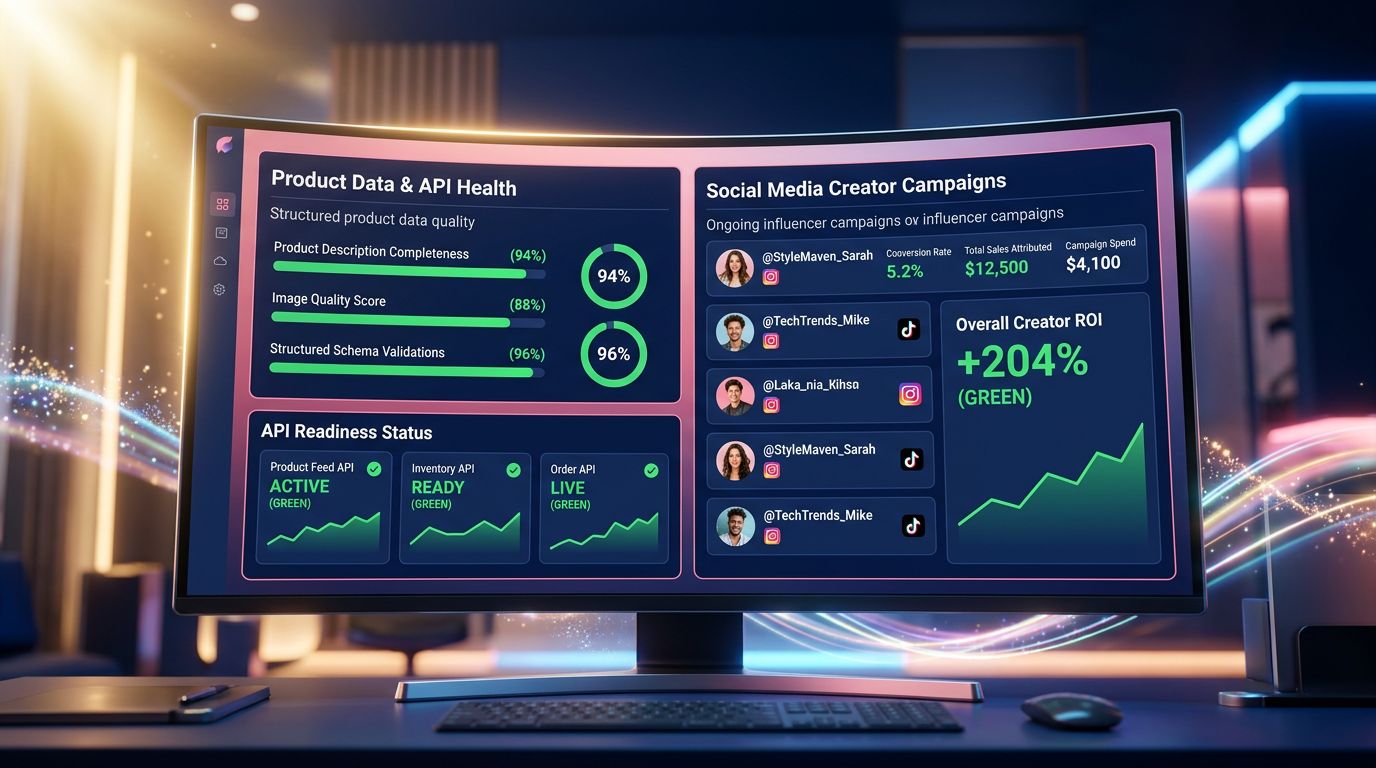
That is blunt. But it is the reality that is coming. Stores that have invested in the quality of their product data — precise descriptions, structured attributes, consistent prices — will gain a considerable lead over those that bet solely on design. This is precisely what we explore in our analysis of why the quality of your product data becomes a critical asset in the face of autonomous AI.
After 15 years working on PrestaShop and WooCommerce stores, I still see product listings with descriptions copy-pasted from the supplier, prices that vary without logic, zero structured markup. Those stores will not be “purchasable” by an AI agent. They will simply be invisible in the next cycle.
Content creators and e-commerce: what three campaigns really proved
On the other end of the spectrum, three creator marketing operations made headlines for very different reasons from the usual “sponsored unboxings”.
The fake heiress: a campaign built around a fictional character — a mysterious heiress — who “discovers” products as if buying them for the first time. No big “partnership” disclosure. A storyline built over several weeks. Result: an engaged community that waited for each episode, and sales that followed the narrative curve.
The tea mob: a coordinated operation around a tea brand, with creators organising digital “flash mobs” — moments of spontaneous convergence around a product. The mass effect created artificially, but experienced as organic by participants.
Little wins: creators documenting micro-positive moments of everyday life, with ultra-natural product integration. Not “here is why this product is incredible” — just “I had a good day, and it was part of it”.
What stands out from these three approaches is one constant: the product is no longer centre stage. The story is.

The lesson for SMEs that want to sell online
I will be direct: you do not have the budget for these campaigns. And you do not need it.
What these operations demonstrate is that the lever is not the budget, it is narrative relevance. A local creator with 8,000 loyal followers in your geographic area or niche will generate more sales than an influencer with 500,000 followers who does not know your product.
What we see concretely with our clients: the collaborations that work are those where the creator genuinely uses the product in a context that is natural to them. Not a posed photo. Not a text we provided. An integration that looks like their normal life.
The entry budget for this type of operation? Often between €200 and €500 for a well-targeted local creator. The ROI regularly exceeds what a poorly configured €800 Google Ads campaign generates.
The real problem: is your store ready for these two realities?
Here is where it gets interesting. These two trends — agentic payment and creator marketing — seem opposed. One is hyper-technical, cold, automated. The other is human, narrative, emotional.
In reality, they attack the same problem: your online store must work across several channels simultaneously, with radically different logics.
An AI agent will look for your product data via your API or structured feeds. A human buyer will arrive from TikTok after watching a creator’s video. Both must find a coherent, smooth experience that converts. We already dissected this from the seller’s perspective in our article on how AI replaces the salesperson and truly changes the online store.
“Tomorrow’s commerce will not be uniform. It will be multi-channel by nature, with human buyers influenced by creators, and purchases automated by AI agents. The stores that survive will be those that have structured their infrastructure for both.” — Field analysis, GDM-Pixel, 2025
What does that mean in practice?
For the technical layer (AI agents): clean product listings, JSON-LD markup, an exportable product feed, an API or at minimum a structured XML feed. Consistent prices. Real-time stock. An ordering process without unnecessary steps.
For the human layer (creators and social networks): visuals usable by third parties, a clear brand story, products that integrate naturally into lifestyle content, and a landing page that converts when someone arrives with the intent to buy (not just to browse).
These two layers are not incompatible. They are complementary. But most stores I audit have one or the other — rarely both.
What we do concretely for our e-commerce clients
On the PrestaShop and WooCommerce projects we support, we have integrated a systematic checklist over the past six months around these two axes.
On the structured data side: JSON-LD implementation on all product listings, clean and up-to-date Google Shopping feed, product attributes completed at 100%, clean variant management. This work generally takes 2 to 3 days on an existing store. The gain in Google Shopping visibility is measurable in 4 to 6 weeks.
On the content and creators side: we help our clients identify relevant local creators (often micro-influencers between 2,000 and 15,000 followers), we structure the collaboration brief, and we create dedicated landing pages for each campaign to track real results. No approximation — clean numbers.
A client in the food sector in Normandy tested this approach in January. Result from a €350 campaign with two local creators: 47 directly traceable orders, average basket of €38. Net positive ROI from the first operation.
This is not magic. It is method.
Three concrete actions to implement before the end of the quarter
No list of 15 points. Three actions. The ones with the most impact and the least friction.
First action — audit your product listings. Take your 20 best-selling products. Check that each listing has: an original description (not copy-pasted from the supplier), all attributes filled in, at least 3 quality visuals, and structured markup. If half of those boxes are not ticked, that is your number one priority.
Second action — identify two local creators. Not stars. Creators with an engaged audience in your sector or region. Instagram, TikTok, YouTube — whatever the channel, look at the engagement rate (real comments, not just likes). Contact them with a simple proposal: product offered + modest fixed payment + clear tracking of results.
Third action — simplify your purchase funnel. Count the number of clicks between “I want to buy” and “order confirmed”. If you exceed 5 steps, you are losing sales. On mobile, it is even more critical. An AI agent or an impatient human buyer abandon at the same point: unnecessary friction. If you want to tackle this from the ground up, we cover these topics on our e-commerce store creation page.
Conclusion: the e-commerce of 2025 rewards structure AND authenticity
Agentic payment is not a threat to your store. It is a filter. It will reward merchants who have done the foundational work on their data, and penalise those who bet solely on design or paid advertising.
Creator marketing is not reserved for big brands. It is a lever accessible right now, with SME budgets, provided you target well and measure honestly.
These two realities are arriving at the same time. This is not a coincidence — it is the nature of online commerce in 2025: more automated in the pipes, more human in the relationship.
Is your store structured for both?
If you are not sure of the answer, this is probably the right time for an audit. We work on PrestaShop and WooCommerce for 15 years — we know exactly where to look, and we do not sell a rebuild when a 3-day audit is enough.
Contact GDM-Pixel for a diagnosis of your online store — honest diagnosis, realistic timeline, clear budget.
Sources: Worldline press release — first European agentic payment (2025); Campaign analysis “Little wins, a fake heiress and a tea mob” — The Drum (2025)
 Social networks
 Analyze with AI