+33-9-7266-3068
 contact@gdm-pixel.fr







 TL;DR - Key Takeaways at a Glance
The latest digital marketing trend just took a fatal hit
A consultant may have already told you this in a meeting: “You now need a separate AEO strategy on top of your traditional SEO.” Two budgets, two teams, two logics. One for Google Search, one for AI agents.
Good news: it’s nonsense.
Google just said it outright — “Search and Agents are one product.” Blunt translation: there is no second playing field. There never was. And the agencies selling you a separate AEO strategy were charging you twice for the same work.
Here’s what that actually changes for your site, your content, and your budget.
What Google actually announced (without the marketing filter)
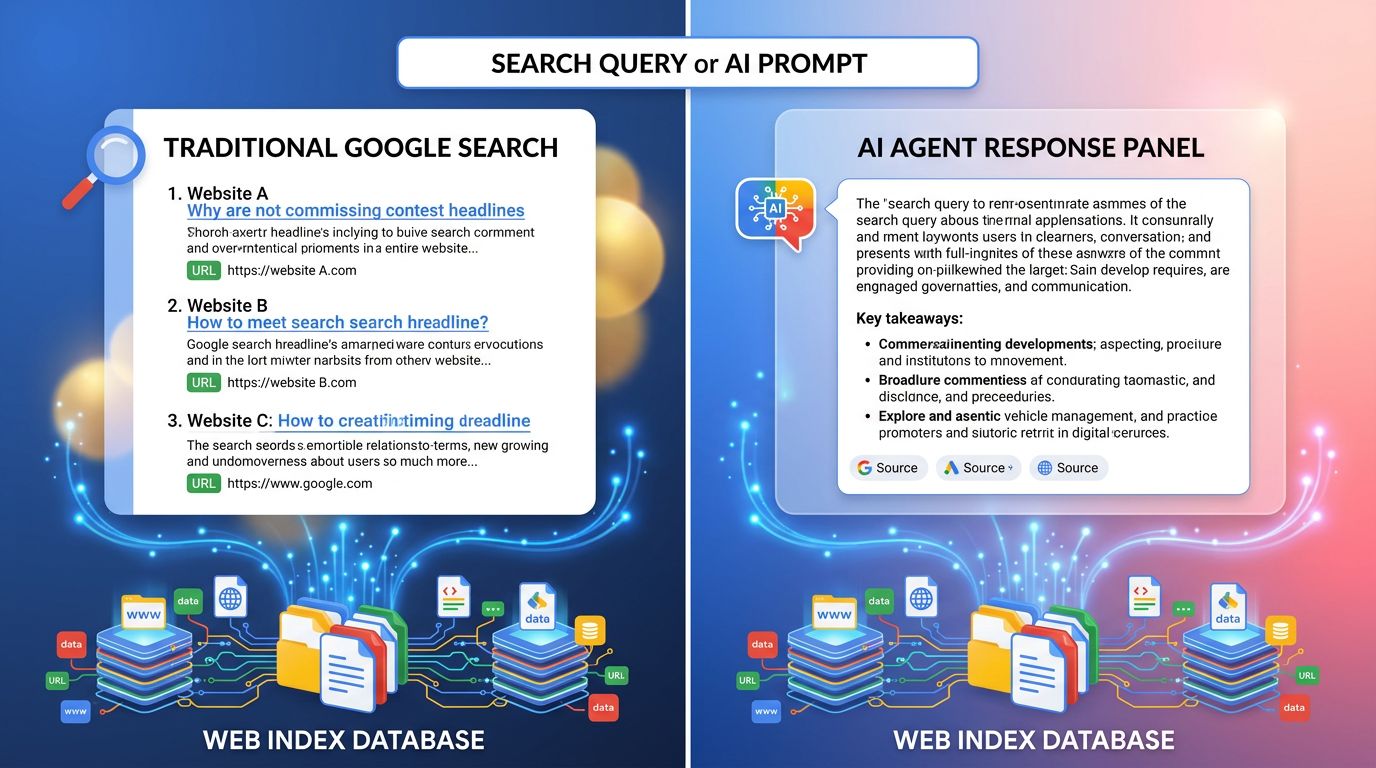
At Google I/O 2025, Google’s teams were clear on a point many misread: classic search and AI agents aren’t two products coexisting — they’re one evolving product.
When you type a query into Google Search today, you’re already interacting with AI layers (SGE, AI Overviews, embedded Gemini). When an AI agent answers a question for you, it pulls from the same index, the same quality signals, the same authority criteria as the traditional search engine.
The AEO/SEO split was therefore an artificial construct. A buzzword born from legitimate anxiety about AI, repackaged into a new billable service.
What we see in practice, across audits: the sites performing well in traditional Google Search are exactly the ones showing up in AI agent answers. Not a coincidence. Same underlying algorithm, same authority logic.
Why the separate-AEO myth worked so well
Let’s be honest about the mechanics here.
The SEO industry has a well-documented history of reinventing its own vocabulary. Every major algorithm shift has spawned a new batch of billable acronyms: SMO, ORM, GEO (Generative Engine Optimization), and now AEO (Answer Engine Optimization, or Agentic Engine Optimization depending on who’s pitching it).
The pattern is always the same. A real technological shift happens. Business anxiety rises. Consultants package that anxiety into a new offer. Budgets fragment.
Except this time, Google cut the maneuver short by saying the part nobody usually says out loud: their systems don’t make that distinction. Why would you?
The ground truth, after years of tracking SEO shifts: the fundamentals haven’t changed. What changed is the exposure surface — where and how your content gets consumed. Not the rules that decide whether it deserves to be shown.
What Google’s unified view means in practice
Here’s where it gets useful — and actionable.
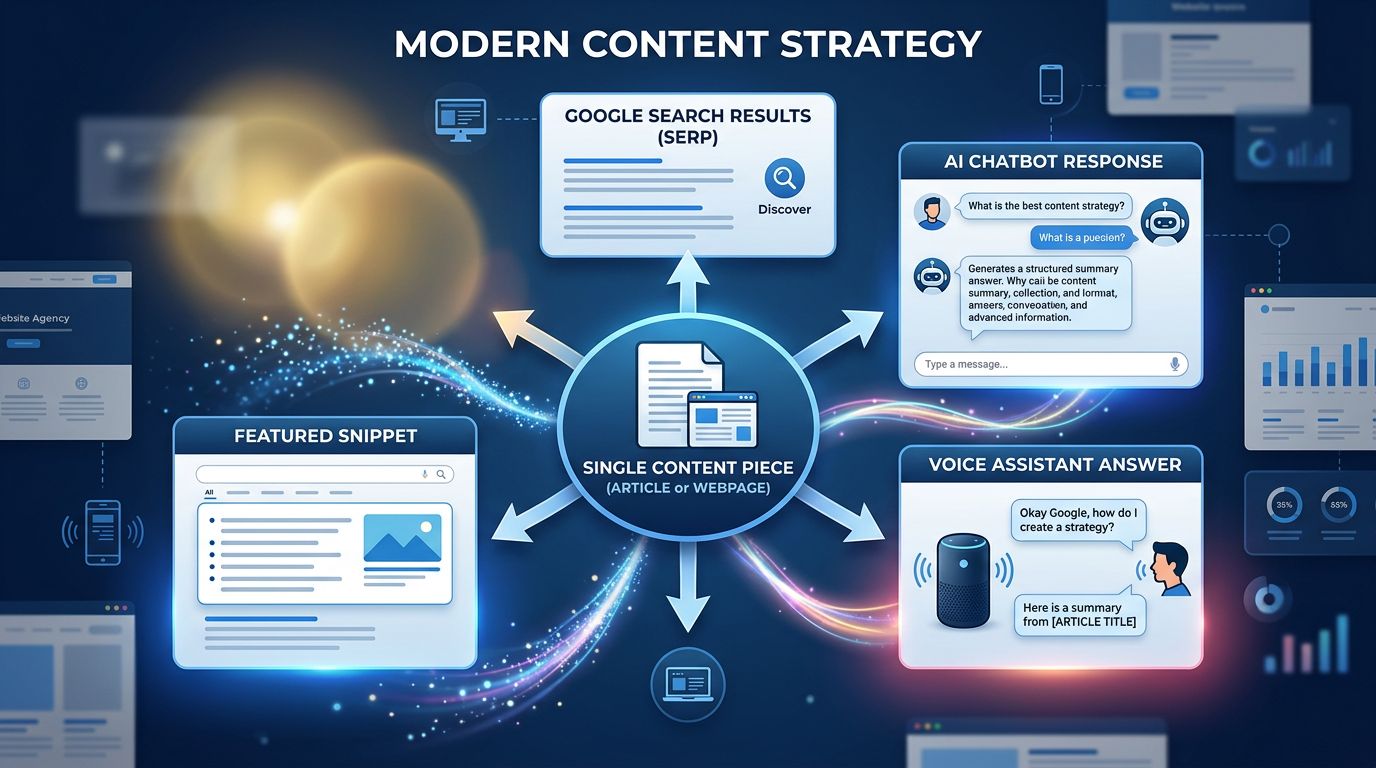
If Search and Agents are one product, your content strategy needs to serve both at once. The good news: that’s exactly what a solid SEO strategy has always done.
Topical authority: still the core engine
An AI agent answering “who’s the best plumber in Caen” isn’t looking for a site optimized for agents. It’s looking for a site with authority on plumbing in Caen. Local mentions, customer reviews, content answering real trade questions, consistent NAP (Name, Address, Phone) data across the web.
That’s local SEO. Not AEO. Never needed a rebrand.
Structured content: the unchanged foundation
Schema.org markup, well-built FAQs, structured data — all of this has helped Google understand your content for years. Those same signals are exactly what AI agents use to pull precise answers.
You don’t implement it twice. One clean implementation serves both surfaces.
E-E-A-T: the universal signal
Experience, Expertise, Authoritativeness, Trustworthiness. Google’s quality framework applies identically to agent-generated answers. Content written by an identifiable expert, backed by concrete evidence of hands-on experience, performs in Search AND in agent answers.
At GDM-Pixel, when we produce content for clients, we don’t ask “is this optimized for AI agents?” We ask “does this genuinely solve the client’s problem, with provable expertise?” Everything else follows.
Three real adjustments to make (without overhauling your strategy)
Not everything stays identical. The unified view doesn’t mean “change nothing.” It means “stop duplicating effort” and make a few targeted adjustments instead.
Structure your answers more explicitly. AI agents favor content that answers a question directly, without detours. This isn’t a break from SEO — it’s its natural evolution. Question/answer format, H2 headings that are real questions, opening paragraphs that give the answer before expanding on it.
Build your presence in trusted sources. Wikipedia, regional press, verified professional directories, industry associations — AI agents weight mentions in these sources heavily. Again: that’s link building and off-page reputation. Classic SEO, done well.
Make your human expertise visible. Author pages with real bios, documented case studies, detailed client testimonials. Agents look for genuine expertise signals, not generic content. If your site reads like AI content written for AI content, you lose on both fronts.
“The best way to prepare for AI search is to have a website that genuinely helps people.” — John Mueller, Google Search Advocate
That quote predates the whole AEO debate. It’s still the best summary available.
The real risk: getting distracted by the wrong debate
Here’s the question that should sting: while you’re evaluating whether you need an “AEO strategy,” your competitors — heads down on content, technical health, and local authority — are widening the gap.
Distraction is the real enemy. Not the lack of an acronym.
What we see with clients making real SEO progress: they stopped chasing every new label for SEO and disciplined their execution on the fundamentals instead. Useful content published consistently. Clean technical setup. Local reputation built methodically.
None of them run an “AEO strategy.” All of them perform well in Google’s AI Overviews.
The causation is right there.

What this changes for your budget and priorities
If you’re wondering whether you need a separate budget line for “AI agent optimization,” the answer is no.
Here’s what to do instead.
Invest in content that genuinely answers your prospects’ questions — not generic SEO filler, but precise answers to real problems in your industry. A plumber in Rouen publishing a detailed article on “when to replace lead pipes” does more for AI visibility than any agent-specific technical tweak.
Keep your information consistent across the web. Google Maps, business directories, website, social profiles — everything needs to align. AI agents cross-reference these sources to judge a business’s reliability.
Work on speed and technical accessibility. Core Web Vitals, clean HTML structure, correct semantic markup. A fast, well-structured site gets crawled and understood more efficiently — by crawlers and by agentic systems alike.
According to Semrush’s 2025 search trends data, domains appearing in Google’s AI Overviews consistently share the same traits: strong topical authority, long and detailed content, a natural link profile. Nothing specific to “agents.”
Three takeaways before you close this article
1. One content strategy is enough. Executed well — real expertise, direct answers, clean structure — it covers classic Search and AI agents without major adjustment.
2. AEO isn’t a separate discipline. It’s good SEO with extra attention to answer format and visible expertise signals. Not a new budget line, not a new vendor.
3. Google gave you the answer. “Search and Agents are one product.” When a search engine tells you how it works, believe it. And optimize accordingly — once, properly.
Conclusion: stop optimizing for distinctions that don’t exist
The SEO industry has a talent for complicating what should stay simple. Google’s unified view of Search and Agents is actually a simplification — it tells you that you don’t have to manage two parallel ecosystems.
That’s good news. Take it as such.
At GDM-Pixel, we’ve built our content approach on a simple principle: create resources worth finding, by any search system, today and tomorrow. No chasing the algorithm of the moment. A solid foundation built to last.
If your site struggles to generate qualified traffic, if your content isn’t showing up in AI answers, if your local rankings are stagnant — the fix isn’t a new AEO strategy. It’s probably an honest audit of your SEO fundamentals.
That’s what we do. Technical diagnosis, content analysis, actionable recommendations — without selling you a redesign you don’t need. Contact GDM-Pixel for an audit that tells you what works and what’s holding you back, no unnecessary jargon.
 Social networks
 Analyze with AI