+33-9-7266-3068
 contact@gdm-pixel.fr







 TL;DR - Key Takeaways at a Glance
The Language Barrier Just Fell — and Nobody Is Really Talking About It
A salesperson in Normandy on a video call with a Japanese partner. Each speaks in their own language. Each hears the other in theirs. With the other person’s voice.
This is no longer science fiction. Google has just deployed a real-time translation feature capable of reproducing your voice in 70 languages. Not a robotic synthetic voice — your voice, with your intonations, transposed into another language on the fly. The same voice-cloning technology we dissected in our article on the opportunities and pitfalls of voice cloning in 2 minutes.
And meanwhile, VivaTech opens its doors in Paris on 20 June, with 50 free entries offered by ActuIA for the public day.
Two signals pointing in the same direction: AI is no longer a lab topic. It is landing in the day-to-day workflows of businesses. Now.
The real question is not “will AI change business?” It already has. The question is: are you watching the train pass by, or are you getting on board?
What Google’s Voice Translation Actually Does
Let’s be precise. No hype, no vague promises.
Google has announced a real-time translation feature that goes well beyond the automatic subtitling we already knew. The novelty: the system clones your voice to deliver the translation with your own vocal characteristics — timbre, rhythm, accent.
70 languages covered. In real time. With no noticeable delay.
What this concretely means for an SME:
- A meeting with a German client without an interpreter
- Customer support that replies in Arabic, Polish or Japanese — with your team’s voice
- Sales presentations delivered in the buyer’s language, without a pre-translated script
This is no small thing. For decades, the language barrier was a real obstacle to the internationalisation of French SMEs. Hiring a bilingual salesperson is expensive. Using an interpreter is slow and unnatural. Having all your materials translated is a significant budget.
Here, we’re talking about a friction that disappears.

VivaTech 2025: Why It’s Worth the Trip This Year
ActuIA is offering 50 free entries for the public day on 20 June at VivaTech. It’s in Paris, at the Parc des Expositions Porte de Versailles.
I’ll be direct: VivaTech is not always where the real technical decisions are made. It is often a lot of corporate stands, marketing demos and CEO speeches.
But this year, the context is different.
We are at a pivotal moment. Generative AI went from prototype to production in 18 months. The tools that existed in beta a year ago are now in the workflows of agencies like ours. And the players arriving at VivaTech 2025 are no longer presenting concepts — they’re showing what’s running in production.
For a business owner who doesn’t have time to do tech monitoring every week, one day at VivaTech can be worth 3 months of reading. As long as you know what to look for.
What you come to find at VivaTech is not the big keynotes. It’s the stands of growth-stage startups, live demos, conversations with peers who have already deployed these tools in their companies.
“AI is not a technology of the future. It is a technology of the present that the majority of businesses have not yet integrated into their processes.”
What Voice Translation Reveals About a Broader Trend
Let’s return to the Google feature, because it illustrates something important.
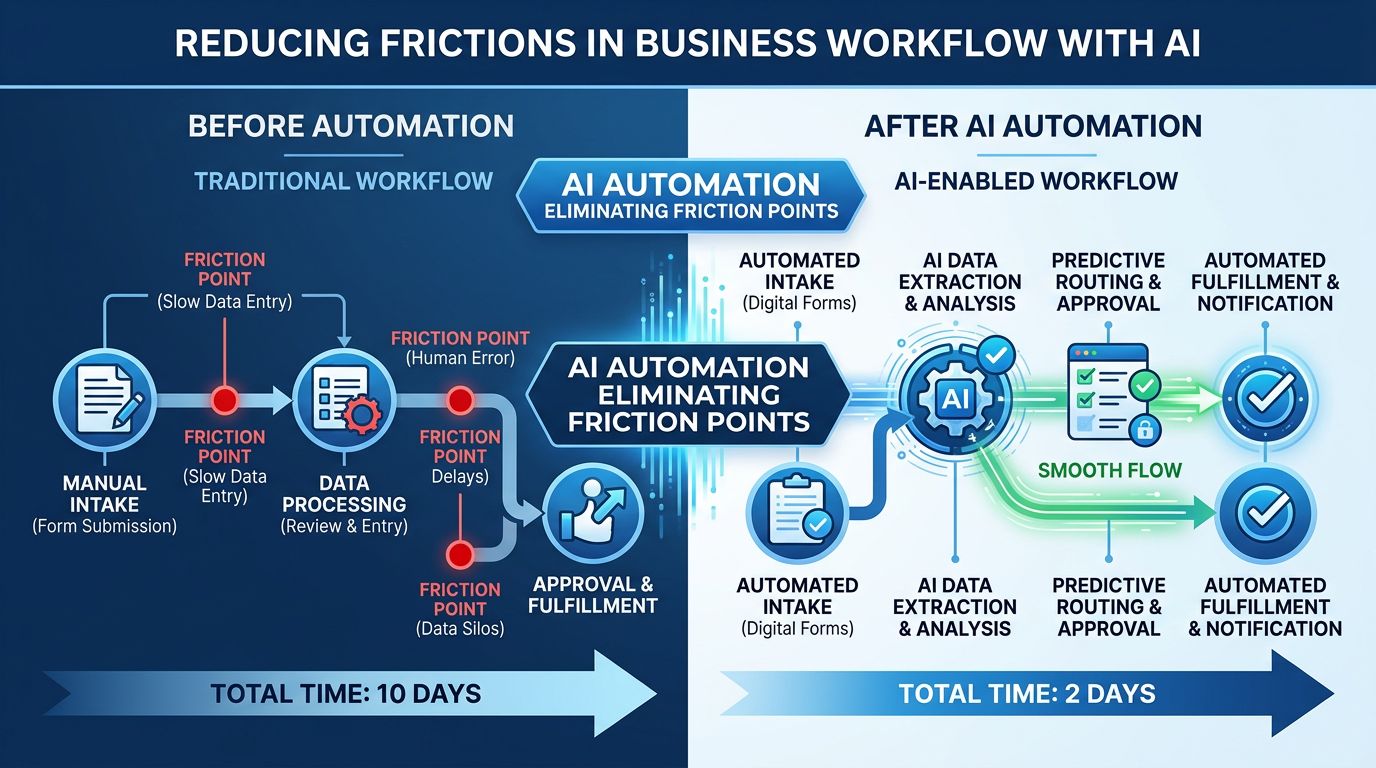
Here’s where it gets interesting: this is not just a translation tool. It is an example of what AI does best — eliminating frictions that seemed irreducible.
For 20 years, the language barrier in professional exchanges had no simple solution. We had got used to it. We had built workarounds: targeted recruitment, translation budgets, markets limited to the French-speaking zone.
AI doesn’t just do what we used to do, better. It erases constraints we had accepted as permanent.
That’s exactly what we experienced in our agency with the automation of web production. Before: 3 to 4 weeks to deliver a site. We had optimised, we had templates, we had processes. But that was the floor. The constraint seemed irreducible.
After industrialisation with Claude Code and our MCP servers: 3 to 7 days. Not because we worked faster — because we eliminated frictions that had no added value.
Real-time voice translation follows exactly the same logic. It’s not “doing the same thing better”. It’s removing a fundamental constraint.
The 3 Questions to Ask Yourself Now (Not in 6 Months)
What agencies never tell you is that most businesses miss the adoption window. Not because they don’t see the value — but because they wait for the technology to be “mature” or “proven”.
Google’s voice translation is proven. It’s running. It’s available.
Here are the three concrete questions to put to your team this week:
1. Which frictions in our business seem permanent but perhaps aren’t?
The language barrier is one example. But in your sector, there are others. Response time on client quotes. Updating your product catalogue. Chasing overdue payments. Writing up meeting notes.
List the tasks you do because you’ve always done them that way — not because they add real value.
2. Which AI tools are already available for our specific sector?
Not the generic tools everyone talks about. Vertical tools, designed for your trade. A restaurant owner doesn’t have the same needs as an accounting firm. The solutions exist — they don’t make the same headlines as ChatGPT, but they’re running in production at your competitors’, as shown by these quiet AI tools that are deeply transforming businesses.
3. What is our real cost of inaction?
How much does it cost you each month not to have automated your client follow-ups? How much do you lose in business opportunities because you can’t reply in English to an international prospect? How much time does your team spend on tasks that AI would do in 3 seconds?
The cost of inaction is rarely calculated. Yet it is very real.
What This Changes for Your Online Presence
One final point, directly connected to our daily life as a web agency.
Real-time voice translation is going to accelerate a movement already underway: the internationalisation of small businesses.
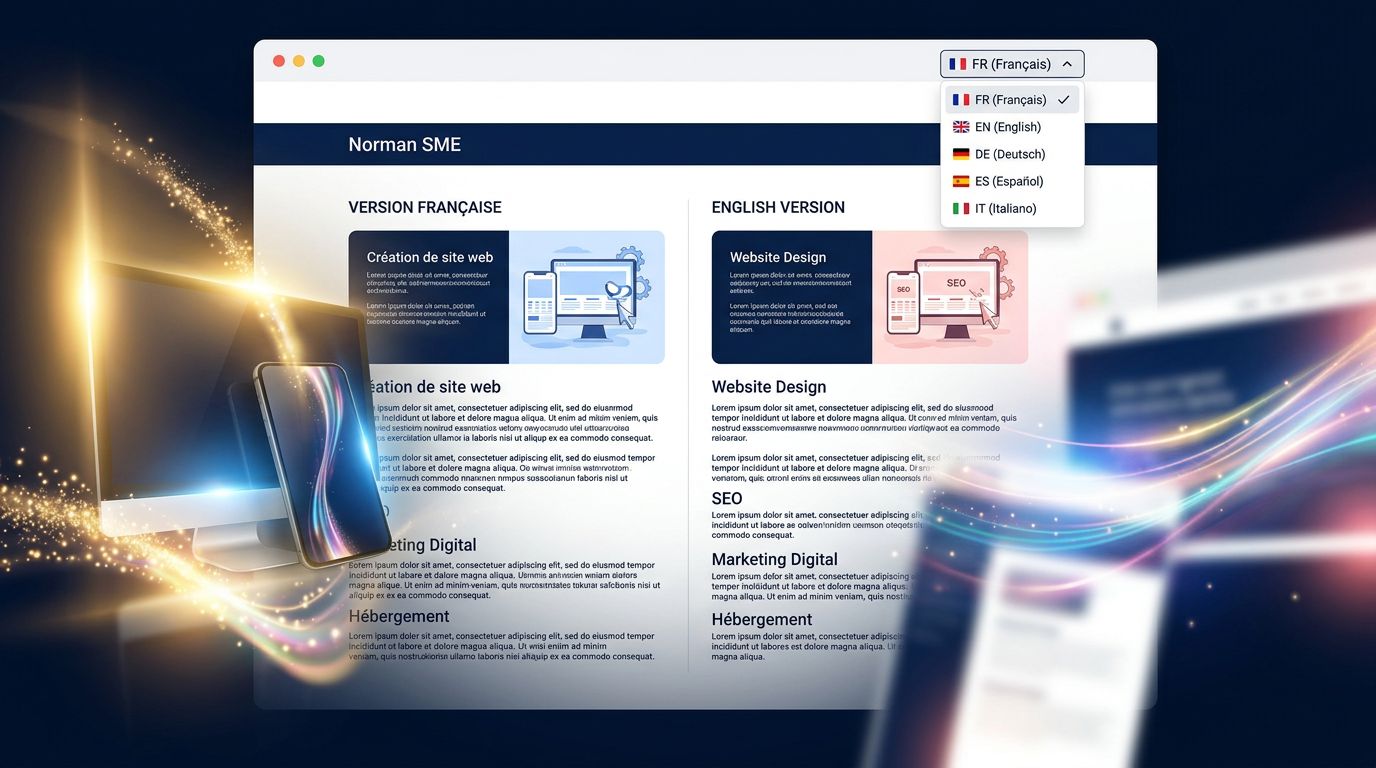
Until now, creating a multilingual website represented a significant investment. Not just technically — mostly in terms of content. Translating 50 pages of a site, keeping the versions up to date, adapting the tone to each market: it’s a project in its own right.
Tomorrow, with AI translation tools of growing quality, the technical barrier collapses. What remains: strategy and intent.
Do you genuinely want to attract clients outside France? Is your offering adaptable to other markets? Is your site built to support several languages without a complete overhaul?
These questions are better thought through now — before your competitors already have a site in 3 languages and a presence in markets you considered out of reach.
“Technology doesn’t create strategy. But it radically changes what is achievable with what budget.”
Our current stack (Astro + Tailwind + automated content) is natively designed for multilingual. That’s not a coincidence — it’s an architectural decision made 18 months ago, precisely because we saw this trend coming.
3 Key Takeaways
AI removes permanent frictions. Real-time voice translation is not an incremental improvement — it’s the removal of a constraint that SMEs had accepted for 20 years. Other constraints in your sector will fall the same way.
The adoption window is now. Not in 2 years when the technology is “truly mature”. The tools making the difference in 2025 are available today. Every month of waiting is a month behind the competitors who have already started.
Your website needs to be ready for this world. Multilingual, fast, built on an architecture that adapts. If your current site is 5 years old and was never designed for multilingual or AI integration, now is the right time to talk about it.
The Concrete Next Step
If you are in Normandy or Île-de-France and have questions about integrating AI into your business — whether for your website, your content production, or the automation of your internal processes — that’s exactly what we work on at GDM-Pixel.
We don’t sell miracle training programmes. We document what we’ve built and help businesses apply it to their context, within our AI agency support offering.
Two concrete options:
If you want to see these technologies in action, the 50 free entries offered by ActuIA for VivaTech on 20 June are an opportunity to seize — details are on the ActuIA website.
If you want us to look together at what’s applicable in your business right now, contact us directly. We’ll do an honest diagnosis — and if your situation doesn’t require our involvement, we’ll tell you.
AI won’t revolutionise your business overnight. But the businesses that started integrating it 18 months ago are today delivering 5 times faster than those still watching.
The train is at the station. It won’t wait.
 Social networks
 Analyze with AI