+33-9-7266-3068
 contact@gdm-pixel.fr







 TL;DR - Key Takeaways at a Glance
We All Build on Sand — and That’s Normal
A client calls. They want a website. They know what they sell, they know their customers, they even have a vague idea of the design they like. But when you dig — really dig — nobody knows exactly what will convert. Nobody knows whether the button should be red or green, whether the homepage should lead with the product or the customer problem, whether the form should have 3 fields or 7.
Uncertainty isn’t a bug in website creation. It’s a permanent feature.
For 15 years, I managed that uncertainty the old way: intuition, experience, laborious A/B tests, long iteration cycles. The result: 3–4 week cycles to deliver a site that was, at best, a 60%-validated hypothesis — one that too often ended up raising the real question: why your website isn’t generating any clients.
AI changed my relationship with uncertainty. Not by eliminating it — it can’t. But by allowing me to reason probabilistically, quickly, at scale. And that changes everything about how you build a website.
What “Reasoning Probabilistically” Actually Means
Most decisions in web creation are presented as binary. You choose A or B. You keep or remove. You redo or preserve.
That’s a comfortable illusion.
The reality is that every design or architecture decision is a bet on a probability. Will this hero section capture 60% of visitors’ attention, or 20%? Will this conversion funnel lose people at step 2 or step 4? Will this content rank in 3 months or 18?
Thinking probabilistically means stopping the search for certainty — and starting to manage risk intelligently.
This isn’t new in tech. Developers who practice TDD, product managers working with OKR frameworks, growth hackers iterating on hypotheses — they all reason in probabilities without always calling it that.
What’s new is that AI dramatically compresses the cost of testing those hypotheses.
AI Doesn’t Decide for You — It Multiplies Your Options
This is what I understood after integrating Claude Code into my production workflow.
AI isn’t an oracle. It doesn’t know better than you what your clients want. It can’t predict trends in your local Norman market better than a salesperson who’s been on the ground for 10 years.
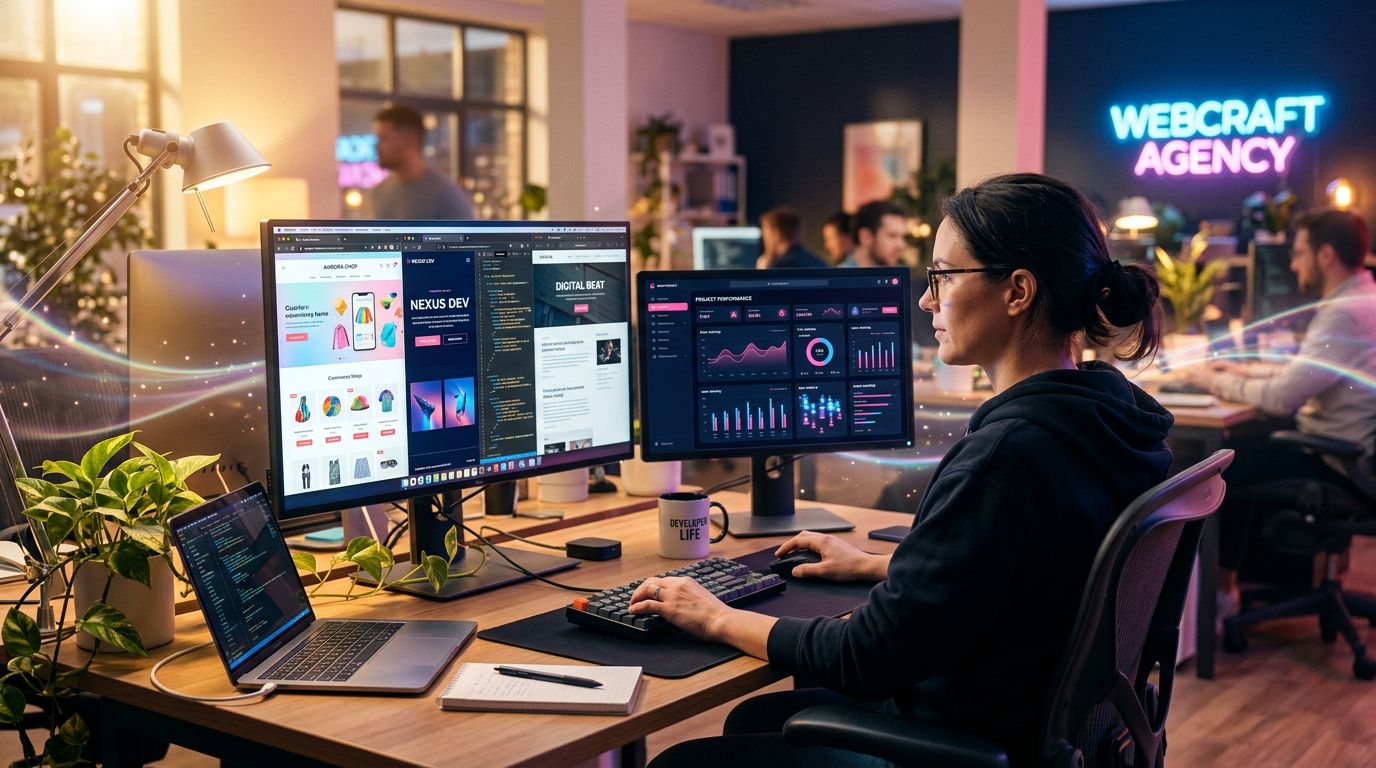
But it can generate 8 homepage variations in 45 minutes. It can produce 3 different information architectures for the same e-commerce site. It can write 5 versions of a hero pitch with completely different angles — product, customer benefit, social proof, urgency, storytelling.
What you used to do in 2 days of wireframing, you now do in 2 hours.
And then something fundamental happens: you stop fighting to defend your first idea, because it’s no longer the only one on the table. You shift from “I need to be right” to “which option has the best chance of working.” This is also what makes prototypes more honest with clients — a topic we explore in depth in the honesty of prototypes in the era of AI website creation.
That’s exactly what reasoning probabilistically looks like. And AI forces you into it, almost despite yourself.
What Cyd Stumpel Taught Me About Continuous Learning
There’s an idea I keep finding among the best web developers I’ve met — one that Cyd Stumpel, a front-end developer known in the Astro and Vue community, expresses clearly: you never finish learning how to build for the web.
That’s not false humility. It’s a technical reality.
The web changes. Standards change. User behaviors change. What was a best practice in 2018 can be technical debt in 2024. A site built without Core Web Vitals in mind before 2021 might have been beautiful — it was simply invisible on Google.
“Always building, always learning” — this isn’t a slogan. It’s an honest description of the craft.
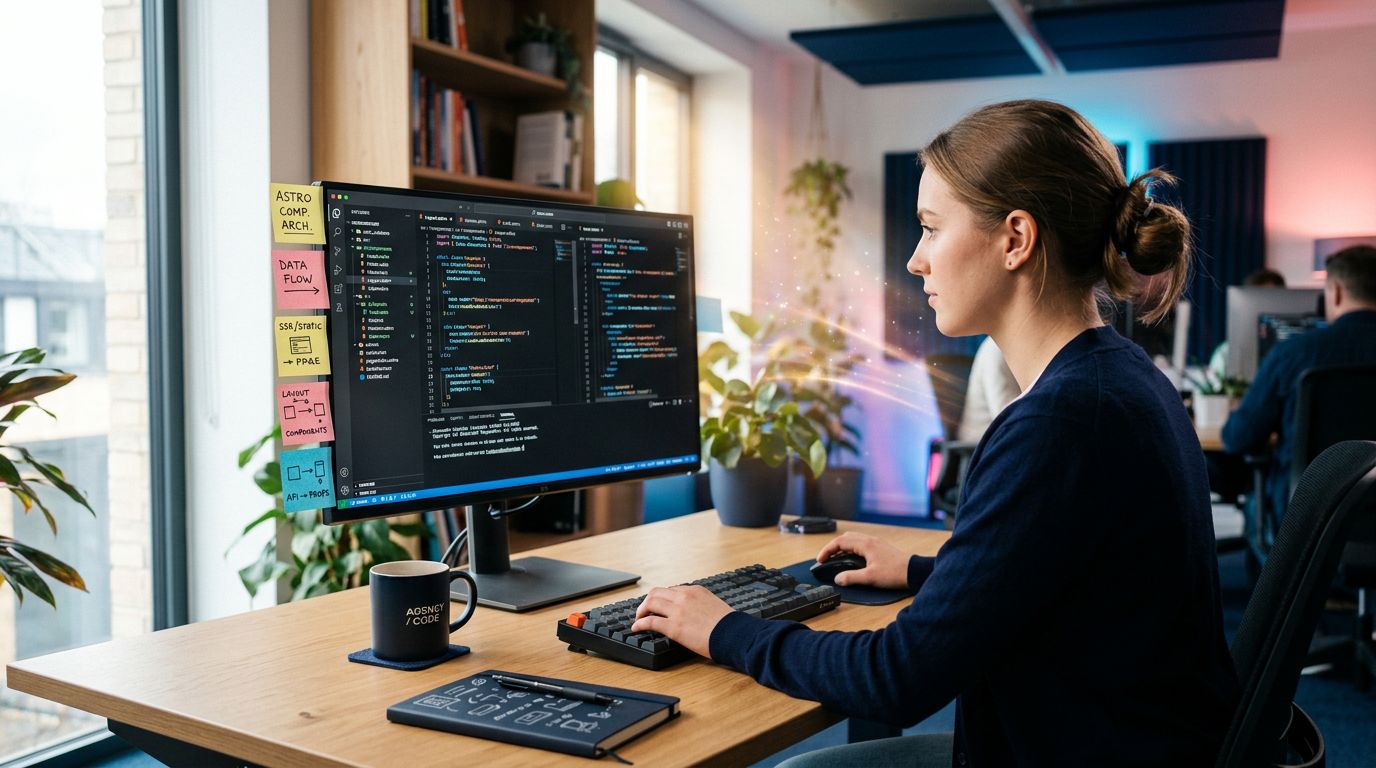
What AI changes in this equation is the speed of absorbing new practices. When Astro 4.0 ships with new APIs, I can ask Claude to generate implementation examples, explain the differences from the previous version, and help me migrate an existing component. What used to take a day of reading documentation and experimenting now takes 2 hours.
AI doesn’t replace learning. It accelerates the cycle.
Building Under Uncertainty: The Concrete Workflow
Here’s how this translates in practice in my agency, on a brochure site project for an SME.
Accelerated discovery phase. Before, I spent 2–3 days building a complete client brief before I could start wireframing. Now, after an initial 1-hour call, I generate with Claude a 15-page document covering personas, conversion hypotheses, proposed architecture, and 3 different editorial angles. The client reacts to something concrete — not to abstract questions.
Probabilistic wireframing. Instead of starting with a single Figma direction, I generate 2–3 different page structures based on explicit hypotheses. “This version leads with social proof at the top of the page — hypothesis: your clients need reassurance before acting.” “This version leads with the client problem — hypothesis: your visitors arrive with a specific pain point and want a quick solution.” The client chooses a hypothesis, not just an aesthetic.
Measurable iterative delivery. The site launches in 3–5 days instead of 3–4 weeks. We integrate Google Analytics 4 with tracking events from day one — not as an afterthought. In 30 days we know whether the hypothesis was right. We adjust. That’s managing uncertainty intelligently.
This workflow isn’t perfect. I’ve had clients choose the wrong hypothesis despite my advice. I’ve had sites that converted less well than expected. The difference: we find out quickly, and we can correct quickly.
The Real Risk Is Pretending You Know
Here’s the trap many web agencies still fall into — and many clients too.
Presenting a single mockup as “the” solution. Defending design choices as certainties. Promising SEO rankings without serious tracking. Delivering a site with no measurement plan.
That’s comfortable in the short term. It avoids difficult conversations. It gives the impression of being in control.
But it’s the exact opposite of what the reality of the web demands.
You know how many brochure sites we audit every year that have no defined conversion goal? Beautiful sites, well-coded, with decent technical SEO — and zero way to know whether they’re generating leads. The agency delivered. The client paid. Nobody knows if it’s working.
“A website without measurable goals is a PDF brochure you paid too much to host.”
Well-managed uncertainty is the opposite of that. It means building with explicit hypotheses, metrics defined from the start, and a culture of iteration rather than final delivery.
3 Actionable Principles for Your Next Web Project
If you take three things from this article:
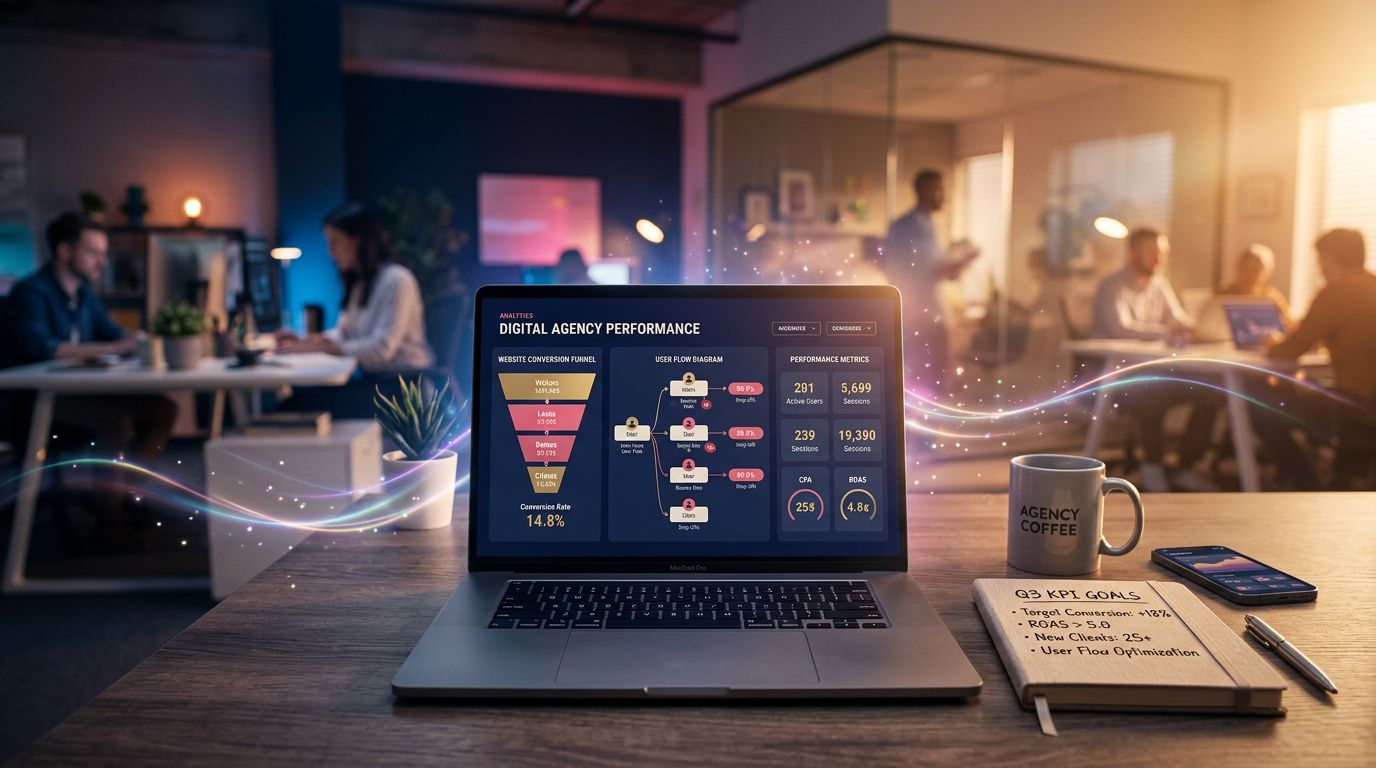
Name your hypotheses before you start. Before approving a wireframe, explicitly state the bet you’re making: “We think our clients decide based on social proof” or “We think price is their primary criterion.” This changes how you evaluate design — and gives you a measurable success criterion.
Use AI to multiply options, not to be right faster. The temptation is strong to ask AI “what’s the best architecture for my site?” and take its answer at face value. Better to ask “give me 3 different architectures with the hypothesis behind each” — and choose with full awareness.
Deliver fast, measure early, adjust often. A site launched in 5 days with solid tracking teaches you more in 30 days than a site polished for 2 months without metrics. Uncertainty shrinks with real data — not with more wireframing time. This is precisely the approach that guides our website creation work.
Building Better Means Building While Accepting You Don’t Know Everything
Fifteen years of building websites, and the most useful lesson I’ve learned is this one: the best projects aren’t the ones where everything was planned. They’re the ones where we had the right tools to learn fast and correct fast.
AI is the best tool I’ve ever had for that. Not because it knows the answers. But because it makes the cost of exploration low enough that you can actually explore.
You have a web project in mind — redesign, first site, e-commerce? Let’s look together at the hypotheses worth testing and build a workflow that gives you answers in weeks rather than months.
Get in touch with GDM-Pixel — honest diagnosis, no commitment, no bullshit.
GDM-Pixel is a web agency based in Caen. We build sites with Astro, React and Tailwind, automate what can be automated, and document what actually works.
 Social networks
 Analyze with AI